
Breaking the Cycle: How Poor Sleep Fuels Chronic Pain—and What Clinicians Can Do About It

In clinical practice, it’s easy to focus solely on biomechanics when treating pain. But when patients return again and again with persistent symptoms, there’s often a silent driver that escapes the treatment plan: poor sleep.
Emerging research—and decades of clinical observation—show a powerful bidirectional relationship between sleep and chronic pain. Yet, too often, it’s overlooked.
We are all very aware of the importance of a properly fitted mattress and pillow as well as sleep posture. Here, however, we will focus on sleep behavior.
Sleep and Pain: A Two-Way Street
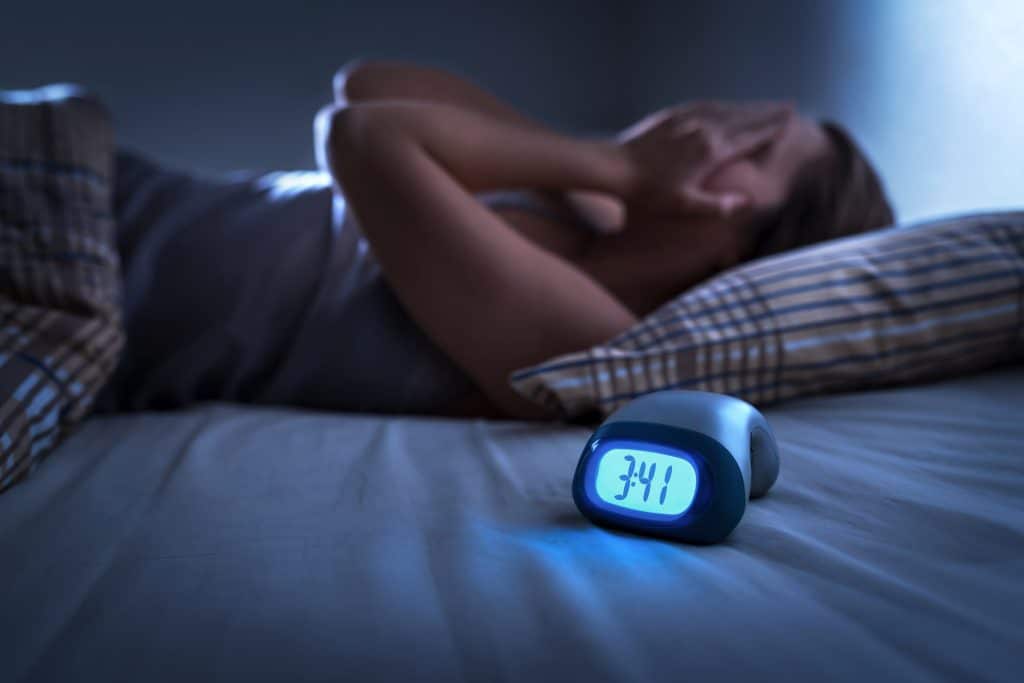
Pain disrupts sleep. That much is obvious. But what’s less intuitive—and critically important—is that sleep disruption doesn’t just result from pain; it can also drive it.
Multiple studies have confirmed that insufficient sleep increases the likelihood of pain becoming chronic. Sleep has a measurable analgesic effect, and when that restorative function is impaired, patients become more sensitive to pain stimuli and less resilient in recovery.
✅ Insight: “Insufficient sleep is predictive of chronic pain. It can also exacerbate depression and fear-avoidance—two known predictors of pain chronicity.” — PD184 CE Presentation
From Acute Pain to Chronic Pain: The Sleep-Mediated Path
Dr. Jossue Ortiz, DC, illustrates this with a simple progression model:
Acute Pain → Disturbed Sleep → Secondary Insomnia → Chronic Pain + Chronic Insomnia
This progression isn’t inevitable, but it becomes far more likely when patients—and providers—miss early opportunities to intervene on sleep.
Even one or two nights of poor sleep after an acute pain episode may seem harmless. But if the patient begins maladaptive coping behaviors—like going to bed too early, napping excessively, or obsessively worrying about sleep—the downward spiral begins.
The Role of Maladaptive Behaviors
Some of the most common patient behaviors meant to “catch up” on rest are actually perpetuating factors of insomnia and pain sensitization.
Examples include:
- Going to bed earlier than usual to “make up” for a bad night
- Staying in bed longer, even when not sleeping
- Using alcohol or OTC sleep aids daily
- Worrying about sleep performance (sleep anxiety)
These patterns lead to fragmented, low-quality sleep and condition the brain to associate the bed with stress, not rest.
✅ Quote: “Attempting to extend sleep opportunity regardless of the body’s ability to produce sleep is a classic perpetuating factor.” — Dr. Ortiz, PD184
Why Chiropractic Clinicians Are in a Unique Position
As a chiropractor, you often see patients early in their pain journey—and frequently. That proximity is a golden opportunity to:
- Screen for early signs of sleep disruption
- Provide brief behavioral guidance (even without being a sleep expert)
- Normalize and validate the sleep–pain link
You may not be treating insomnia per se, but you are treating patients at high risk of developing chronic insomnia and pain. Your role in prevention is both powerful and underutilized.
Evidence-Based Strategies You Can Use Today
You don’t need to be a sleep specialist to help patients sleep better. The following are simple, research-backed techniques you can incorporate into your patient education:
🛌 Promote Sleep Hygiene as Foundational Care
Create a checklist of “sleep-friendly” behaviors: limiting blue light, keeping consistent wake times, regulating caffeine intake, etc.
⏱ Educate on Sleep Efficiency Over Quantity
Shift the conversation from “how many hours” to “how well” a person sleeps. Teach patients about the sleep efficiency metric (e.g., 85%+ is optimal).
🧠 Identify Perpetuating Factors Early
When patients say, “I’m just trying to catch up on sleep,” you have a teachable moment. Brief education on maladaptive sleep behaviors can interrupt a harmful cycle.
🗣 Use Scripts Like:
“It’s totally normal to have some poor sleep after an injury. But what we want to avoid is unintentionally teaching your body that the bed is a stressful place.”
Final Thoughts: Making Sleep Part of Pain Management
Understanding and communicating the sleep–pain connection is not just about “being holistic.” It’s about applying a growing body of science to prevent chronicity, improve outcomes, and support your patients beyond the adjustment table.
As more patients seek non-pharmaceutical ways to manage both sleep and pain, chiropractors are ideally positioned to lead the way.
Want to Learn More and Earn CE?
Content from this blog derived from Physical Diagnosis 184: The Connection Between Sleep and Chronic Pain a 2-hour AV course by Jossue Ortiz, DC. LEARN MORE ABOUT THE COURSE.
Sources
- “Why Sleep Matters–the Economic Costs of Insufficient Sleep, A cross-country comparative analysis.” Marco Hafner, Martin Stepanek, Jirka Taylor, Wendy M. Troxel, and Christian Van Stolk; published Nov 30, 2016. https://www.rand.org/pubs/research_reports/RR1791.html (Accessed 09/24/2025)
- “The association of sleep and pain: An update and a path forward.” Finan PH, Goodin BR, Smith MT. The journal of Pain: Official Journal of the American Pain Society.
